
English 
Views: 0 Author: Site Editor Publish Time: 2026-03-25 Origin: Site
Why Do Fish Like Light at Night?
Why Some Creatures Move Toward Light?
Fishing Lights – Product Introduction and Application Scenarios
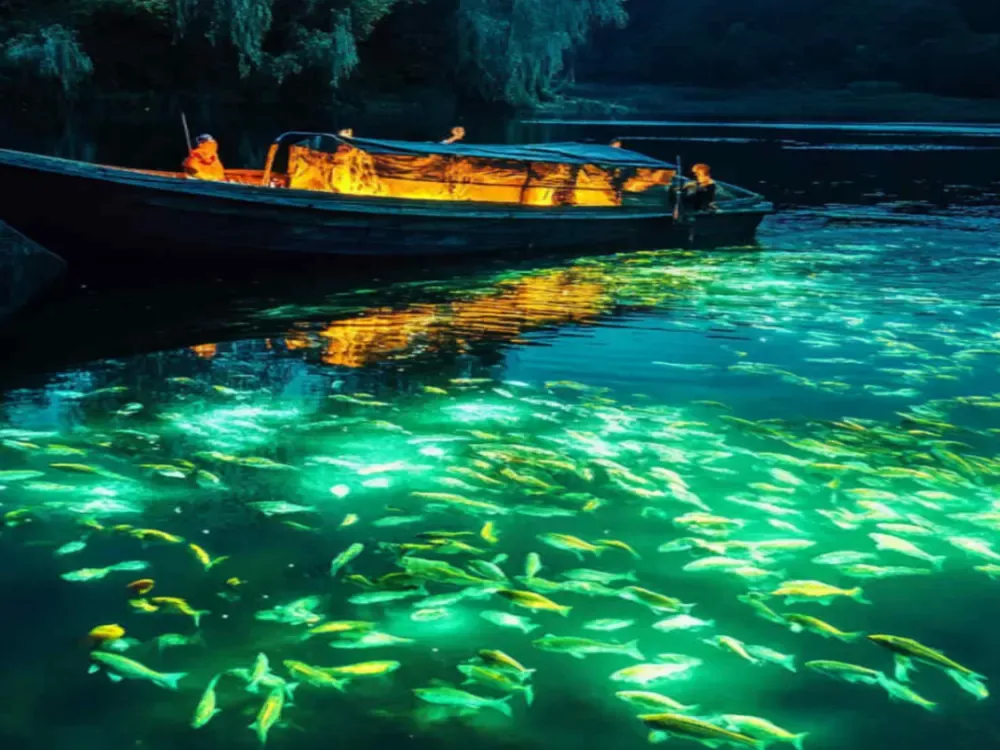
If you have ever fished at night using artificial lights, you may have noticed a clear pattern: small fish are hooked first, followed by larger predators. This is not a random occurrence but it is a food chain reaction triggered by light.
This guide introduces the scientific principles of phototaxis, the characteristics of underwater light, and practical tips for choosing fishing lights in various water environments ranging from small ponds to deep-sea areas.
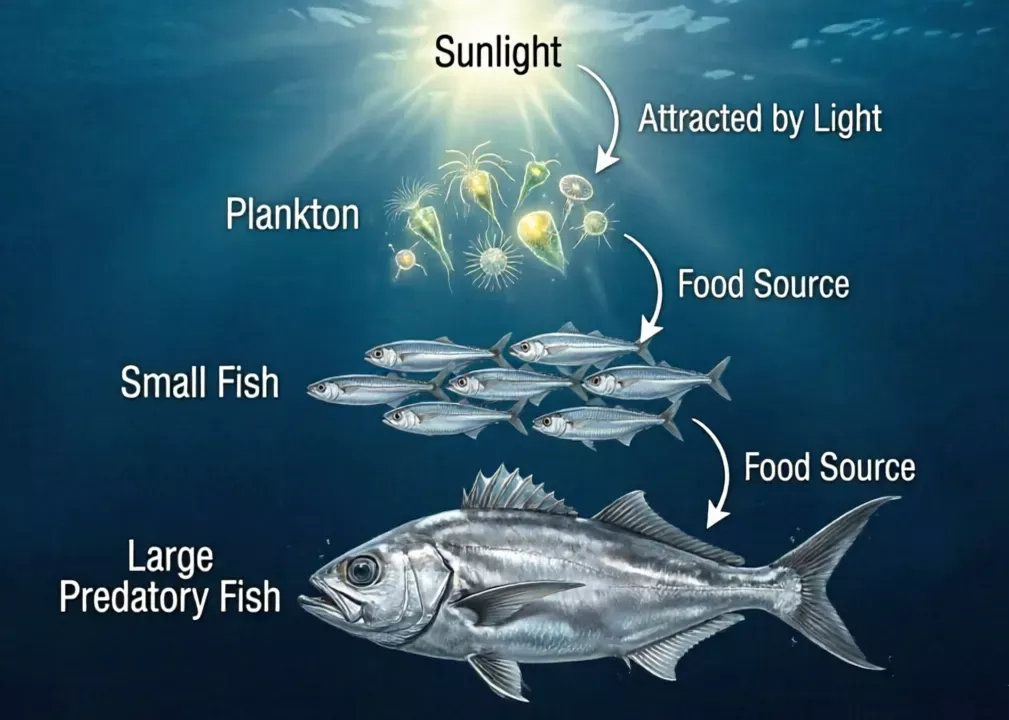
Fish may seem attracted to light, but the real reason is more complex. The real reason is a food chain reaction. Light triggers a food chain reaction rather than attracting fish directly.
Here's what happens when light hits the water:
Light attracts microscopic organisms like plankton, which draw small fish to feed, and larger predator fish then follow.
That is to say:
Light → Plankton → Small Fish → Predator Fish
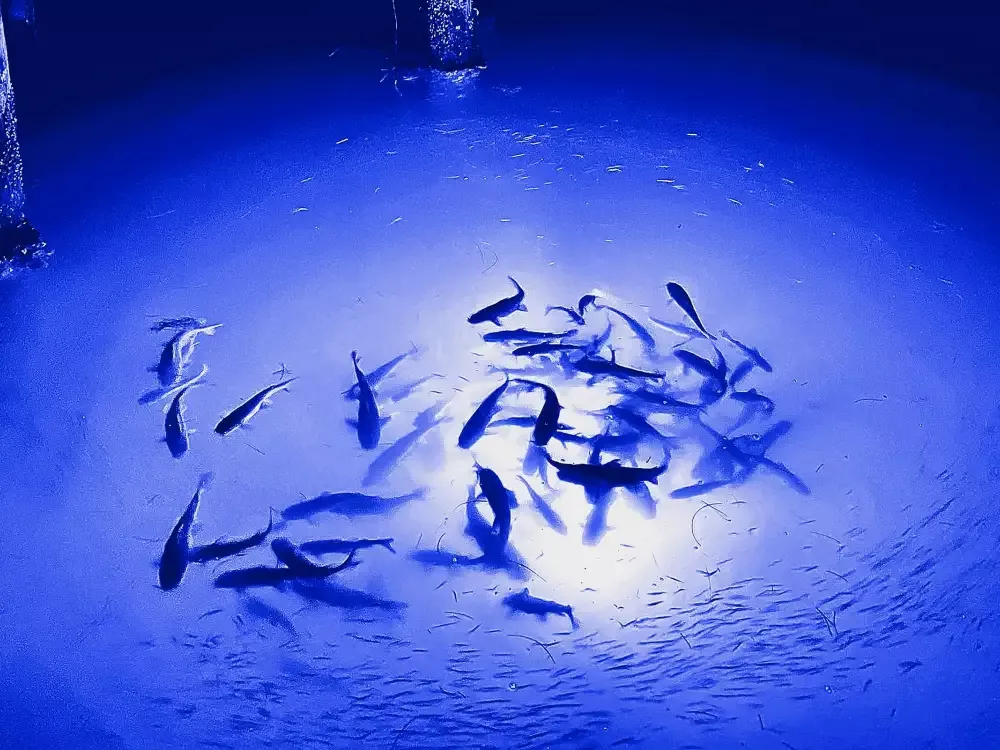
Many tiny organisms in water show a behavior called phototaxis, which means they naturally move toward light sources.
Plankton are strongly attracted to light. This is where the whole process begins. Without plankton gathering, fish would not follow.
Light behaves differently underwater because water absorbs and scatters it. Shorter wavelengths, like blue and green, can travel deeper. Longer wavelengths, like red, fade quickly. That's why fishing lights usually use blue or green, and they reach deeper and attract fish more effectively. Red light, on the other hand, is preferred for aquariums when the goal is to minimize disturbance.
To understand the relationship between different colors and emotions, you can read: How LED Strip Light Colors Affect Mood
| Light Color | Wavelength | Penetration Depth | Effectiveness in Attracting Fish |
| Blue | 450–495 nm | Deep | High |
| Green | 495–570 nm | Medium | Very High |
| White | Mixed | Medium | Moderate |
| Red | 620–750 nm | Very Shallow | Low |
Fishing lights are underwater lights used to attract fish by creating a bright light area. Small baitfish and plankton swim toward the light first, and larger fish follow, improving fishing success at night or in deep water.
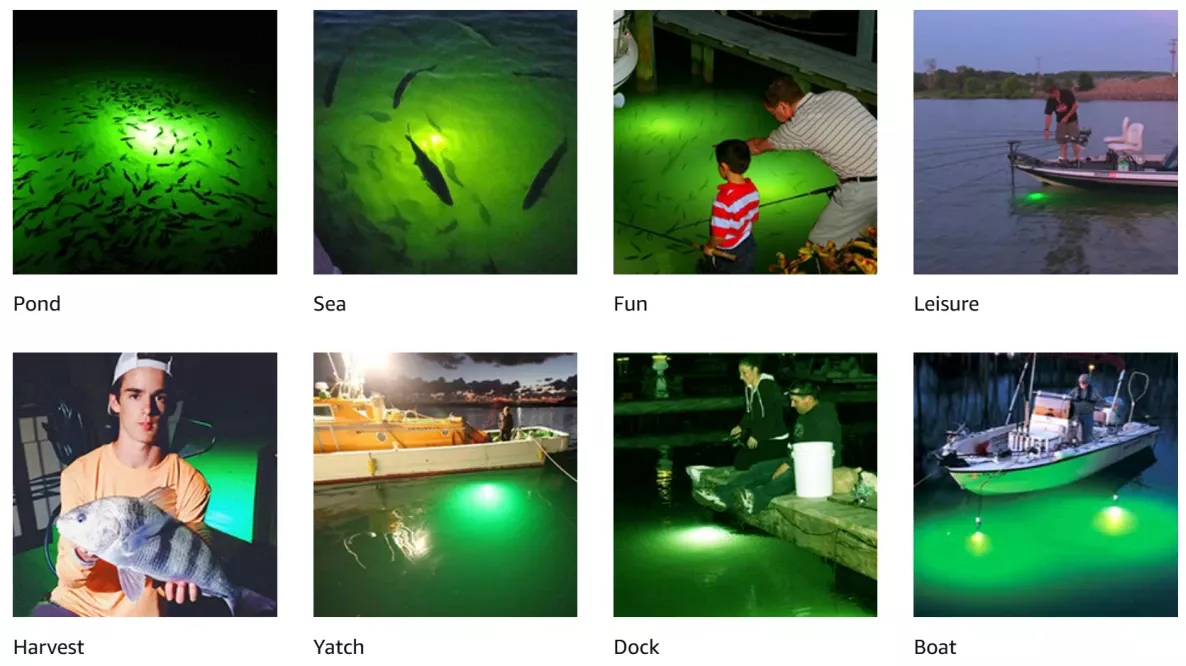
1. Boat fishing
When you place an underwater light on one side of the boat, its light will attract bait fish and large fish in the deep water, guiding them directly towards your boat.
2. Freshwater shore and dock fishing
In lakes and rivers, you can use floats or shore-based bait to gather fish in a specific area. This makes it easier to catch the fish.
3. Aquaculture
In ponds and fish farms, lighting helps to regulate the feeding time and activity level of fish. This is beneficial for the healthy growth of fish populations.
②Types of Fishing Lights
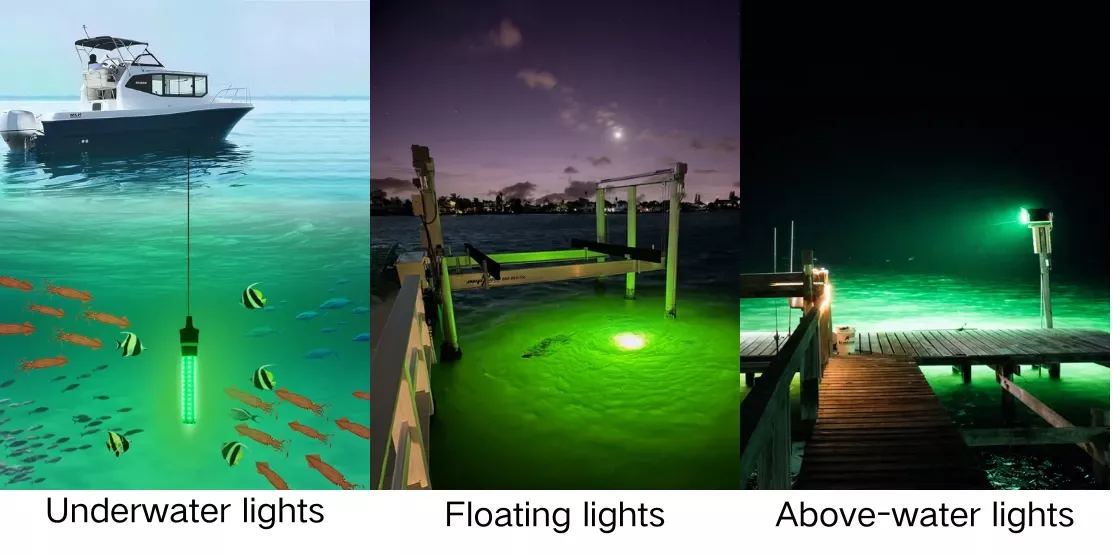
Underwater lights: The lights are placed directly in the water for deep attraction.
Floating lights: The lights stay on the water's surface and are very simple to use.
Above-water lights: The lights are fixed onto boats or docks and can light up a much larger area.
Green: penetrates water well and attracts fish effectively.
Blue: travels deep and works well in clear water.
White: broad coverage and easy to use.
Red: low disturbance and good for observation.
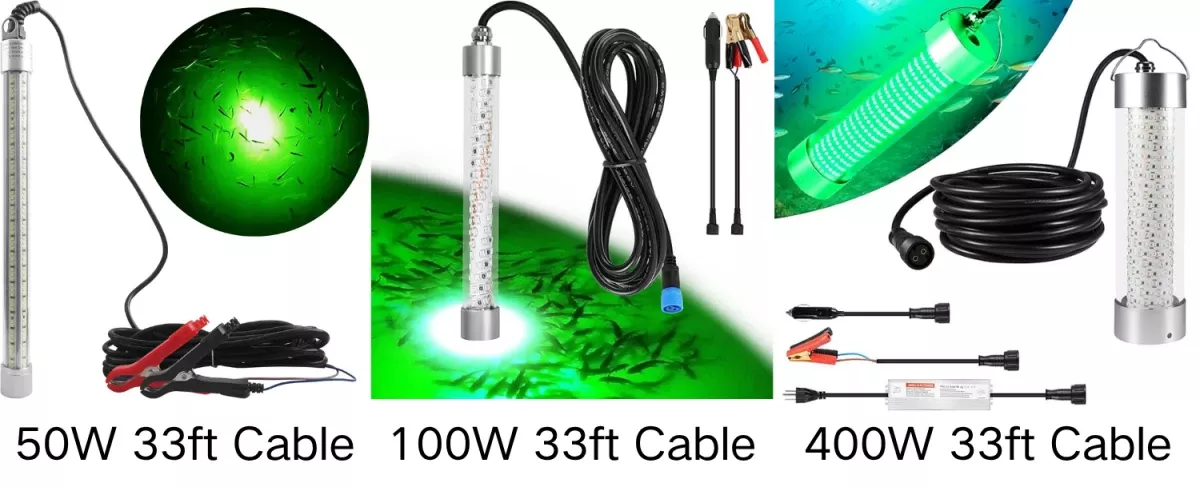
Different power levels of fishing lights are designed for different environments. Choosing the right range improves efficiency and avoids wasted energy.
Low-power lamps are suitable for small ponds or shallow water bodies. These lamps enable you to clearly see the fish. They do not consume a large amount of electricity. However, the brightness is generally low and the coverage area is limited to the nearby area. Fish that are far away will not be attracted at all.
Lakes, rivers, docks and coastal areas are suitable scenarios for medium-power equipment. Using such equipment can provide stable and reliable performance, and there is no need to worry about high energy consumption. However, its range of application is limited, and once it exceeds a certain depth, the effect will significantly weaken.
When you are fishing in deep or near-sea areas, you need to use high-power equipment. These lights can attract fish from wide areas and deep sea regions. However, this leads to an increase in electricity costs, makes the equipment heavier, and the installation process also requires a lot of manpower and resources. Only when the value of the catch is sufficient to cover the costs, is this approach worthwhile.
If you are planning a long-term outdoor installation, understanding how to solve the LED heat dissipation problem can help you choose more reliable fishing lights.
As a general rule, the deeper the water, the higher the power you need. Use low power lights for shallow water and controlled environments, medium power for lakes and rivers, and high to very high power lights for deep water and offshore fishing to achieve the best attraction effect.
Established in 2008, SuntechLEDs is dedicated to providing high-quality lighting products. If you need any assistance, please contact us at sales@suntechleds.com. We also offer a variety of light strips, including facade LED strips and more.
Related posts that you may interest:
 |  |  |
| Compare: Kelvin vs Lumens vs Watt | How to Install Tree Hugger Light | Choose the Right Color Temperature |
 |  |  |
| what is the difference between rgb and rgbw led | LED Strip Wiring Troubleshooting |